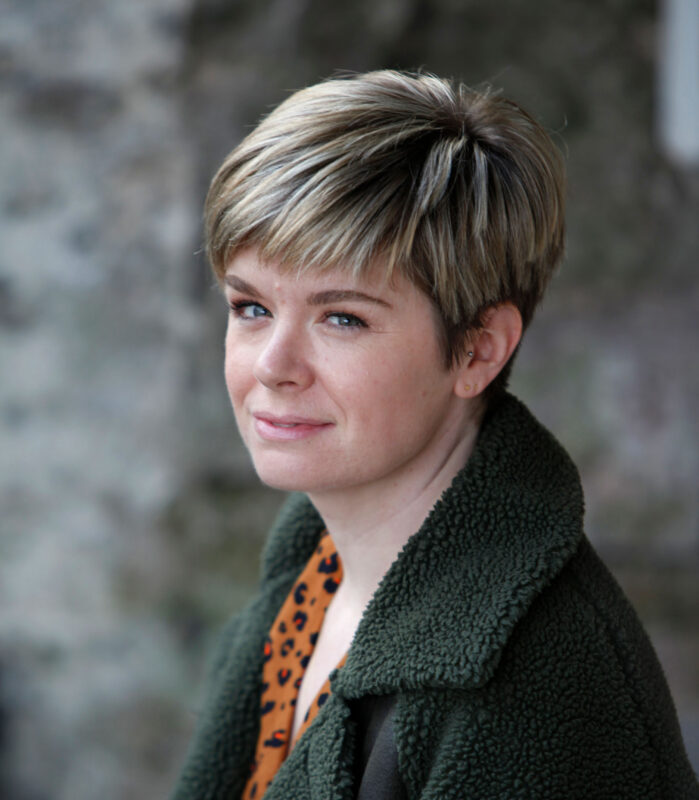
With arts & culture marketing specialist and project manager, Rhian Hughes.
Q1. Rhian, please tell us a bit about your background and how you came to work in arts marketing and project management.
I’ve worked in arts and culture marketing for over 18 years now, mostly in-house at organisations like National Theatre Wales, Rambert, Southbank Centre and the Roundhouse before going freelance just over 3 years ago. Since becoming freelance, I’ve worked with a range of arts and cultural organisations as a consultant and project manager.
I went freelance to focus more on transformational, strategic marketing projects rather than be permanently on the sales and campaign treadmill, which was starting to feel a bit relentless and not playing to my strengths.
I’ve project-managed a new website and integrated ticketing system for Aberystwyth Arts Centre, a brand development and website project for Paraorchestra, and I’m currently managing a digital transformation project for National Dance Company Wales, delivering a new integrated CRM system and website that will improve how they connect with audiences.
I also offer consultancy work around marketing and communications strategy, audience development, plus the odd campaign when teams need the extra support and itfeels like the right fit.
Q2. You talk about being “audience-centric”. What does that mean to you in the context of arts and culture?
For me, audience centricity means genuinely putting audiences at the heart of activity and decision-making.
In a lot of organisations, the instinct is to lead with the art – the work, the artist, the writer, the composer, the director. That’s important, of course, but it’s not the only thing that motivates people. Often it’s the experience or what someone might get from the experience.
Being audience-centric means thinking of your organisation or offer from the outside in, and that can be hard. It’s asking:
Who is this for?
What might they need from us to feel welcome, motivated and excited to come?
What barriers might be in their way?
It means communicating the experience, and meeting people’s needs, like entertainment, escapism or shared experience, rather than assuming everyone is motivated by artistic credentials, so not just saying “Beethoven’s Fifth conducted by X” and expecting that to be meaningful for people who are curious but new to classical music.
It’s about organisations being willing to meet audiences where they are, in language they understand and channels they use, knowing what they want to get out of the play or concert, not what the company is interested in.
Q3. Why do you think arts organisations often struggle to put audiences first?
As I’ve said, it can be hard. When you’re part of an organisation, you tend to see things from the inside-out, rather than the outside-in. There are a few other reasons. One is tradition: many organisations have historically defined themselves by their artistic legacy and excellence That mindset can unintentionally centre the art more than the audience.
Another big factor is capacity. Marketing teams are often stuck on a hamster wheel – campaign after campaign, show after show. It’s very tactical: get the copy out, get the email out, get the social posts scheduled, move on to the next thing. There’s very little breathing space to step back and ask:
Is this actually working?
Who are we really reaching?
What do audiences need from us?
On top of that, there can be internal resistance – for example, a feeling that changing approaches to be more accessible is “dumbing down”, which I don’t agree with at all. It’s not dumbing down; it’s opening up.
Q4. You’ve mentioned the “hamster wheel” effect in marketing teams. What needs to change to move from tactics to strategy?
First, organisations need to recognise that strategy is not a luxury; it’s a necessity. If your team is permanently operating at 110% on the day-to-day stuff, something has to give – and often it’s reflection, learning and long-term planning.
Moving from tactics to strategy means carving out time and headspace to look at the bigger picture:
- Who are our current audiences, and who’s missing?
- What are our goals beyond filling seats this week?
- What can we stop doing because it isn’t delivering?
Bringing in external help can create that space. Someone to ask the questions, and help teams step off the hamster wheel just long enough to think, without everything falling over in the meantime.
Q5. You’ve worked on several digital and transformation projects. How does that connect to audience centricity?
Digital projects are often treated as “IT projects” when they’re actually about audiences and people. A new website or CRM isn’t just a piece of technology; it’s a key part of how an organisation connects to its audiences.
At Aberystwyth Arts Centre, at Paraorchestra, and now with National Dance Company Wales, my role has been to help connect the dots between platforms and audiences:
- Does the website help people understand what the organisation does and why it matters to them?
- Is it easy to book, donate or find and access information?
- Are CRM and ticketing systems set up so we can actually learn from audience behaviour and communicate with them in a meaningful way?
A lot of the work is translation – between artistic teams, marketing teams, leadership, and tech providers – so that everyone is working towards a shared understanding of what audiences and users need, and how digital tools can support that.
Q6. What are some of the biggest pitfalls you see when arts organisations embark on a new website or digital project?
The biggest one is underestimating the content and capacity side of things. Organisations often focus on design and functionality, which are important, but leave content – what’s our strategy? Who’s going to create and manage it? – until late in the process.
Things like audience personas, tone of voice, and content strategy should be thought about very early on. Otherwise, you end up with a beautiful new website that’s held up at launch because nobody has had the time or support to populate it.
Another common pitfall is not thinking holistically about how everything works together to achieve objectives – CRM, ticketing, marketing, fundraising, and audience development. That’s where having someone whose job is to see the whole picture and advocate for audiences across it can add a lot of value.
Q7. Where do you see freelancers and consultants adding the most value to arts organisations in this space?
Freelancers and consultants can be really useful as translators and connectors. We can sit between the organisation and external agencies or suppliers and make sure the project is grounded in audience needs, realistic capacity, and that everyone is working towards the same goals and vision. We can help connect all the dots.
Sometimes that means helping shape the brief before funding is even applied for – asking questions like:
What problem are you actually trying to solve?
How does a new website or CRM connect to your wider audience strategy?
Who internally will own this once the project is over?
We can also provide extra hands and brains at key points in a project, so in-house teams aren’t trying to juggle a major transformation on top of an already full workload.
Q8. You say you’re not a big fan of social media personally. How do you reconcile that with working in marketing?
I’m not someone who loves being constantly “on” online, and I have a bit of a red line around managing social media, simply because there are other people who do live and breathe it and are therefore much better at it than I am. As I said before, I like to work to my strengths. But to get your social media right, you have to have the right foundations in place. And that’s where I can help, to think more deeply about what’s genuinely valuable to people, and what’s sustainable for teams. It’s often not about being everywhere; it’s about being intentional.
Where are your audiences actually spending time?
What kind of content is realistic for your team to produce consistently?
How does social support your broader goals, rather than becoming another turn of the hamster wheel?
In terms of my own work, I always joke that despite working in marketing, I’m terrible at marketing myself. LinkedIn is helpful, but otherwise I rely much more on networks, word of mouth, platforms like Culture Briefs, and sector connections through things like the Arts Marketing Association. That more relational approach fits my personality and, I think, the way a lot of people in the sector naturally operate.
Q9. Finally, what keeps you hopeful about the future of audiences in arts and culture?
What keeps me hopeful is that there are so many people in the sector who care deeply and are doing their best, even in today’s difficult funding and political landscape. I see more organisations willing to ask questions, try out new things, and I see people talking more honestly about capacity and burnout.
I’m also encouraged by examples of organisations reframing how they talk about their work – focusing on the experience, and on building relationships rather than just selling tickets. When we truly centre audiences, we make the work more relevant to more people, and ultimately more sustainable.
Closing Thoughts
So how can you become more audience-centric without knowing where to start?
Start small, but start deliberately.
- Listen: Talk to your audiences and non-audiences. Run a few conversations, review your feedback, and ask simple questions about what people need and what gets in their way. We’re talking about more than a post-show survey!
- Clarify your priorities: You can’t fix everything at once. Choose one or two areas where audience-centred thinking could make a clear difference, maybe it’s how you describe your work, your booking journey, or your welcome for first-time visitors.
- Make time for strategy: Protect some time each month to look at what you’re learning. Even a little bit of regular reflection can start to shift things.
- Get help if you need it: If your team is already at capacity, bringing in someone external to help structure the work isn’t a luxury; it’s often what makes change possible.
Most importantly, don’t see itas a one-off project. It’s an ongoing practice and mindset.
If you’re planning a new website for a live performance organisation, we’ve created a practical Website Content Checklist to help you prepare content early and avoid the bottlenecks Rhian describes.
Join the Community
We’re building a community within arts and culture, connecting the inspiring minds from the sector to ponder the digital opportunities and challenges upon us and share stories of digital transformation.
Join our newsletter to get involved.
Image Credit: Photo by Krists Luhaers on Unsplash.